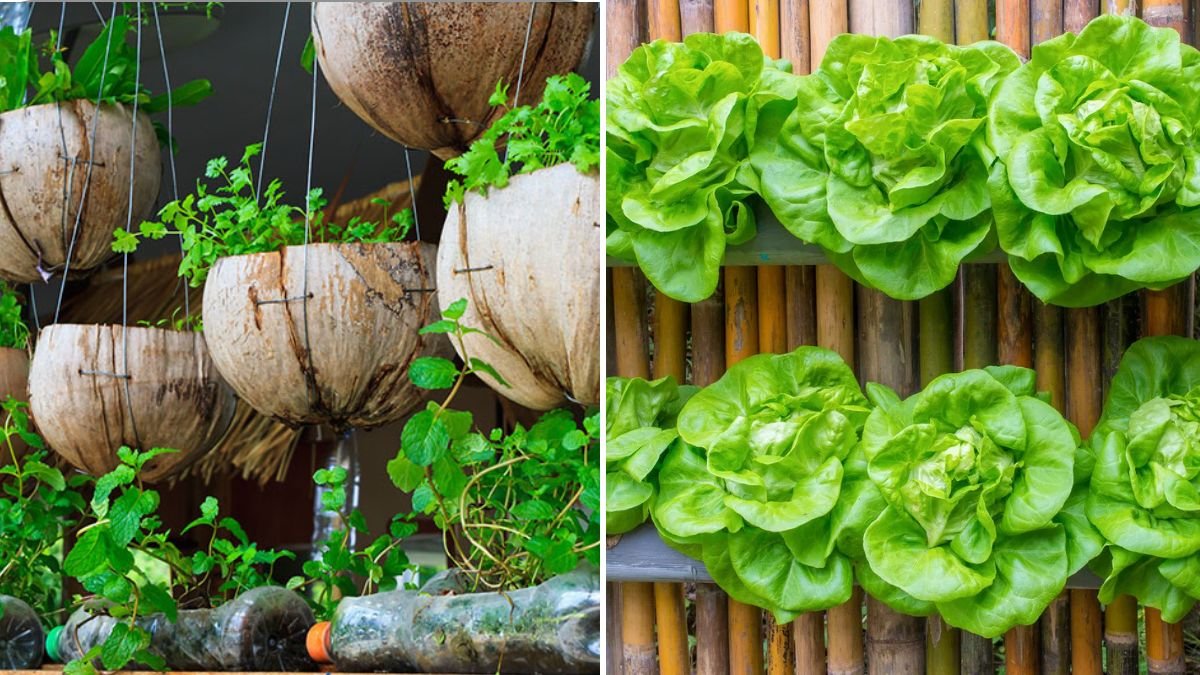
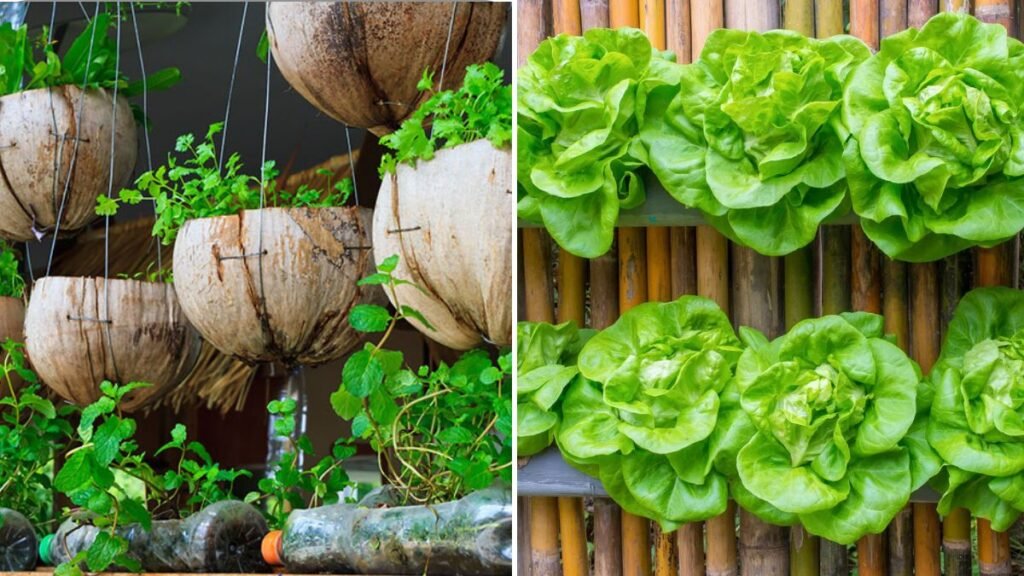
Hanging vegetable gardens offer space-saving solutions. Perfect for balconies, small yards, and terraces. Plants grow vertically in pots, baskets, or containers. They improve sunlight exposure and airflow. Easy access simplifies maintenance. Vertical arrangement reduces pests. Aesthetic appeal adds charm. Suitable for leafy greens, herbs, and small fruiting crops.
Benefits of Hanging Vegetable Gardens
Saves floor space efficiently. Easier pest control due to elevation. Better sunlight and airflow. Reduces soil-borne diseases. Harvesting is convenient. Improves home aesthetics. Allows year-round gardening indoors or outdoors. Increases productivity per square foot.
Choosing the Right Location
Select a location with bright sunlight. South-facing walls or balconies are ideal. Avoid wind-exposed areas. Ensure safe support for weight. Proximity to water supply helps. Ensure space for maintenance. Good location improves growth and productivity.
Selecting Containers
Use hanging pots, baskets, or self-watering containers. Lightweight materials reduce stress on supports. Ensure drainage holes. Consider stacking multiple levels. DIY containers from recycled materials are cost-effective. Container choice affects plant health. Proper containers improve water management.

Soil Mix for Hanging Gardens
Use lightweight, fertile soil. Mix compost, coco peat, and perlite. Ensure good drainage. Avoid heavy clay soils. Fertile soil supports roots and nutrient uptake. Light soil reduces weight on supports. Soil structure influences productivity. Balanced mix is essential.
Choosing Suitable Plants
Leafy greens like lettuce, spinach, and kale thrive. Herbs such as basil, cilantro, and parsley perform well. Small fruiting crops like cherry tomatoes or peppers are ideal. Avoid deep-rooted crops in small containers. Choose varieties suited to vertical growth. Proper plant selection ensures success.
Planting Techniques
Fill containers with soil mix. Sow seeds shallowly or transplant seedlings. Ensure proper spacing. Water gently after planting. Support plants for climbing crops. Avoid overcrowding to maintain airflow. Proper planting ensures uniform growth.
Watering Hanging Gardens
Hanging gardens dry faster than ground beds. Use drip irrigation or self-watering pots. Check moisture daily. Water at base to avoid fungal issues. Mulching reduces evaporation. Consistent moisture ensures steady growth. Avoid water stress.

Sunlight and Orientation
Most vegetables need six hours of sun. Adjust placement for balanced exposure. Rotate containers if needed. Partial shade helps in hot climates. Ensure sunlight reaches all layers. Sunlight improves leaf quality and fruiting. Monitor plants regularly.
Fertilizing Hanging Gardens
Use organic liquid fertilizer every two weeks. Apply evenly to soil. Avoid overfertilization, which can burn roots. Slow-release fertilizers work well in self-watering containers. Proper nutrition supports continuous growth. Balanced feeding improves yield and flavor.
Supporting Climbing Plants
Use trellises, strings, or hooks. Tie plants gently to avoid stem damage. Training vines upward saves space. Supports improve airflow and light exposure. Strong plants bear more fruit. Proper support prevents bending or breaking.
Pruning and Maintenance
Remove dead or diseased leaves regularly. Thin crowded areas. Maintain airflow between plants. Clean tools prevent infections. Pruning promotes new growth. Regular attention increases yield. Minimal pruning balances energy for fruits and leaves.

Pest and Disease Control
Inspect plants regularly. Aphids and whiteflies are common. Use neem oil or insecticidal soap. Encourage beneficial insects. Elevation reduces ground pests. Healthy plants resist diseases. Early prevention improves harvest.
Harvesting Techniques
Harvest leaves or fruits when mature. Use clean scissors or hands. Avoid uprooting entire plant. Regular harvesting encourages regrowth. Morning harvest retains flavor. Gentle handling reduces damage. Timely harvesting improves overall production.
Succession Planting
Sow seeds every two weeks. Rotate plant varieties. Maintain continuous supply. Succession planting maximizes yield. Planning avoids harvest gaps. Staggered planting maintains aesthetics. Continuous production ensures kitchen supply.
Seasonal Adjustments
Protect plants from frost or extreme heat. Adjust watering and feeding according to season. Mulch to retain moisture. Move containers indoors if needed. Seasonal care prevents stress. Proper adjustments maintain productivity.

Container Garden Design
Layer multiple pots vertically. Use hanging chains or wall-mounted pockets. Balance weight carefully. Arrange plants for sunlight exposure. Design affects maintenance and airflow. Aesthetic appeal improves home decor. Proper planning improves yield.
Common Mistakes
Overcrowding reduces airflow. Neglecting watering dries soil. Heavy soil causes breakage. Ignoring pests reduces yield. Proper monitoring prevents crop loss. Learning improves gardening success. Consistency is key.
Hanging Garden Summary Table
| Aspect | Recommendation | Benefit |
| Plants | Leafy greens, herbs, small fruits | High yield in small spaces |
| Containers | Lightweight hanging pots | Safe and accessible |
| Watering | Drip or regular watering | Healthy growth |
| Sunlight | Six hours daily | Better leaf and fruit quality |
| Fertilization | Organic liquid feed | Continuous production |