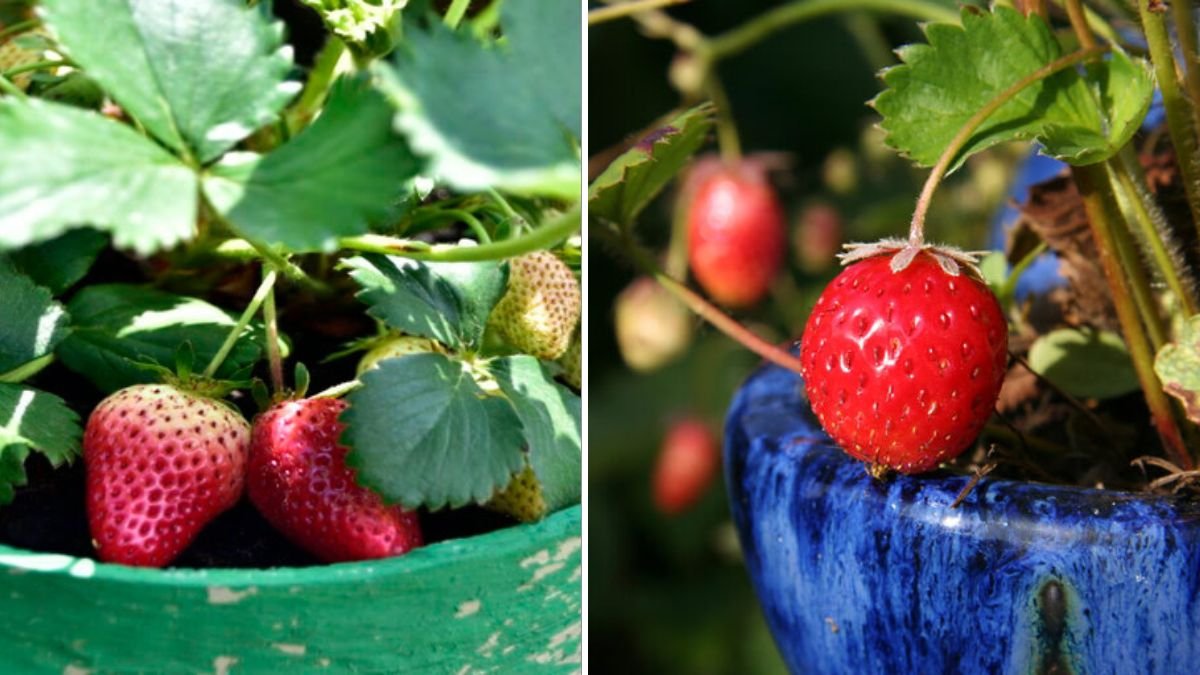
Strawberries are perfect for container gardening on balconies. Their shallow roots adapt easily to small containers. Even tiny spaces can produce multiple harvests with proper care. Containers allow precise control over soil, water, and nutrients. Pests and diseases are easier to manage in elevated setups. Balcony gardening also provides fresh, chemical-free fruit. With high-yield techniques, small plastic containers can produce surprisingly large quantities. This article explains how to grow strawberries effectively in limited spaces.
Benefits of Strawberry Gardening in Containers
Container strawberries save space and reduce soil-borne diseases. Air circulation is better around plants, preventing fungal infections. Fruits stay cleaner and are easier to harvest. Containers allow flexible placement for sunlight. Watering and fertilization are controlled. This method suits urban gardeners. Overall maintenance is low and yields are impressive.
Choosing the Right Strawberry Variety
Day-neutral and everbearing strawberries are ideal. They produce fruit continuously rather than seasonally. Compact varieties fit smaller containers. Disease-resistant types reduce effort. Select varieties with strong roots. Varieties suitable for containers grow faster and yield more. Flavor and sweetness vary among types. The right variety improves harvest consistency.
Recommended Strawberry Varieties for Containers

| Variety Type | Fruiting Habit | Container Suitability |
|---|---|---|
| Day-neutral | Continuous | Excellent |
| Everbearing | Multiple harvests | Very good |
| Alpine | Small fruit | Good |
Selecting Ideal Plastic Containers
Choose containers that are wide and shallow. They allow better airflow and light exposure. Drainage holes prevent root rot. Lightweight containers are easier to handle. Ensure containers can support soil and water weight. Reuse sturdy containers for sustainability. Avoid overcrowding. Adequate spacing improves yield.
Soil Preparation for Maximum Yield
Strawberries prefer light, nutrient-rich soil. Compost adds fertility and structure. Coco peat improves moisture retention. Sand or perlite ensures proper drainage. A balanced mix enhances root growth and fruit development. Avoid heavy clay soil. Well-draining soil prevents fungal diseases. Good soil also improves sweetness and size of berries.
Planting Strawberry Seedlings
Plant crowns at soil level without burying stems. Space plants evenly for airflow. Overcrowding reduces fruit size. Water gently after planting. Ensure roots are fully covered. Mulch around seedlings to retain moisture. Avoid transplanting in extreme heat. Proper planting reduces transplant shock.
Sunlight Requirements
Strawberries need at least six hours of sunlight daily. Morning sun is ideal for growth. Rotate containers to ensure even exposure. Insufficient light reduces fruit size. Full sun enhances flavor. Protect from extreme afternoon heat. Light exposure influences both sweetness and color. Sunlight also encourages flowering.

Watering Schedule
Containers dry faster than ground soil. Water consistently without overwatering. Moisture encourages healthy growth and fruit development. Mulching reduces evaporation. Water early in the morning to avoid fungal issues. Avoid wetting leaves excessively. Monitor soil daily in hot weather. Consistent watering increases yield.
Fertilizing for Continuous Harvest
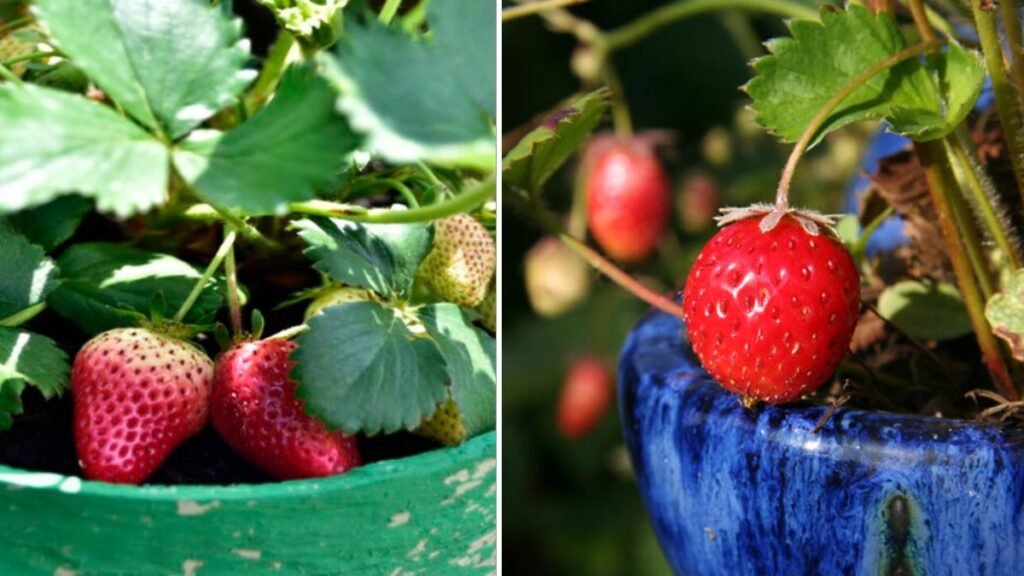
Strawberries require moderate feeding. Organic liquid fertilizers are ideal. Feed every two weeks during growth. Avoid excessive nitrogen, which promotes leaves over fruit. Potassium enhances flowering and fruiting. Balanced nutrition supports large berries. Fertilize more during fruiting stage. Proper feeding ensures high-quality harvests.
Strawberry Fertilizer Schedule
| Growth Stage | Nutrient Focus |
|---|---|
| Leaf growth | Nitrogen |
| Flowering | Balanced |
| Fruiting | Potassium |
Managing Runners in Containers
Remove runners regularly. They divert energy from fruit production. Rooted runners can be planted separately. Pruning runners maintains healthy main plants. Balanced pruning improves fruit size. Containers naturally limit runner spread. Managing runners reduces overcrowding. Healthy plants produce better yields.

Pollination Tips
Strawberries self-pollinate but benefit from insects. Encourage bees or hand pollinate with soft brushes. Proper pollination improves fruit shape and size. Good pollination ensures uniform berries. Wind may help in urban balconies. Avoid pesticide sprays during flowering. Hand pollination is simple and effective. Healthy flowers lead to bigger harvests.
Pest Control
Common pests include aphids and mites. Use natural remedies like neem oil. Inspect leaves regularly. Remove infected foliage promptly. Companion planting may reduce pests. Clean containers prevent infestations. Avoid chemical overuse. Healthy plants naturally resist pests better.
Preventing Diseases
Good airflow prevents fungal problems. Avoid waterlogging. Remove damaged leaves quickly. Containers reduce exposure to soil pathogens. Maintain cleanliness around plants. Regular inspection is crucial. Mulching prevents splashing of soil-borne fungi. Healthy soil prevents root and crown diseases.
Flower and Fruit Care
Remove early flowers to strengthen plants. Support heavy fruit clusters to prevent bending. Keep fruits clean and dry. Monitor fruit development for diseases. Flowers directly affect future yield. Proper care ensures large, ripe berries. Healthy flowers produce sweet, juicy fruit. Timely intervention prevents crop loss.

Harvesting Strawberries
Harvest fully red berries. Pick gently to avoid bruising. Frequent harvesting encourages new fruit. Morning harvest preserves flavor and freshness. Avoid picking unripe fruits. Use clean containers. Ripe strawberries do not store long at room temperature. Proper harvest timing increases overall yield.
Increasing Yield in Small Spaces
Use multi-tier hanging systems. Rotate containers for light access. Regular feeding and watering maintain plant health. Healthy plants produce multiple harvests. Pruning and removing runners optimize energy. Companion planting may improve pollination. Ensure soil fertility remains high. Space-efficient layouts maximize production.
Season Extension Techniques
Strawberries prefer cool temperatures. Shade during extreme heat. Protect from heavy rain. Containers allow relocation indoors if necessary. Frost protection may extend the season. Mulching insulates roots. Containers support continuous harvesting. Adjust care for climate changes.
Environmental Benefits
Reduces water usage. Saves space in urban environments. Produces chemical-free fruit. Reuses plastic containers sustainably. Minimizes food miles. Promotes home gardening. Encourages biodiversity with pollinators. Sustainable method suitable for city living.

Common Mistakes to Avoid
Overcrowding plants. Poor drainage. Excess nitrogen. Inconsistent watering. Lack of sunlight. Ignoring pests and diseases. Improper pruning. These mistakes reduce yield and fruit quality.
Conclusion
Balcony strawberry gardening in small plastic containers is simple and highly productive. With proper soil, sunlight, watering, and care, even tiny spaces can produce large, sweet harvests. This method is affordable, sustainable, and ideal for urban homes. Container strawberries offer fresh, chemical-free fruit with minimal effort.